Showing posts with label movies. Show all posts

Friday, December 18, 2009

With 'Avatar,' Cameron is king of all worlds


Cancel whatever plans you have this weekend. Go find yourself the biggest screen showing "Avatar" in 3-D. It's utterly astonishing. Not the story so much, which is "Dancing with Wolves" or "Ferngully" all over again, but James Cameron's feat of visual imagination is as astonishing as watching Jesus walk on water. As Steven Spielberg put it, "The last time I came out of a movie feeling that way it was the first time I saw Star Wars."

Truth is, my faith in James Cameron had waned. He was, after George Lucas and Steven Spielberg, my first real movie director hero. I remember the day vividly. At age 14, my parents dropped me off at a cinema and I opted to see "Aliens." Didn't know a thing about it. Had never even heard of "Alien" at that point. The movie poster of a sweaty Sigourney Weaver even looked oddly like Michael Jackson. But I knew it was sci-fi and that was enough for me. I was one of four people in the movie theater for a matinee screening and that sense of isolation only enhanced what became one of the most intense cinematic experiences of my life. "Aliens" is a masterpiece. An action-suspense film that clamps down on your heart because Cameron spends a lot of time developing characters you care about.

From that day I was a fan. I was entranced by both "Terminator" movies as well as the tongue-in-cheek homage to James Bond, "True Lies." I particularly loved "The Abyss" (well, apart from the "ET" ending) because the scuba diver in me has always been fascinated by the deep. Has there ever been a more heart-stopping moment in cinema when the Ed Harris character tries to revive his wife, played by Mary Elizabeth Mastrantonio?

Alas, "Titanic" shook my faith in Cameron. The movie has numerous incredible scenes and the third-act sinking of the boat is utterly indelible. But the characters of Jack and Rose were too cartoonish and Cameron's depiction of the social mores of 1912 seemed far too modern in sensibility to be believable. Kate and Leo may have had a natural chemistry but the crass storytelling and risible dialogue kept me at arm's length from fully embracing the film, much as I wanted to. Don't even get me started about the silliness of Billy Zane's character chasing after Leonardo with a gun even as the ship is sinking...

"Avatar" reminded me why I loved James Cameron in the first place. You may already know the story which, according to some, is a rip off of a Poul Anderson's short story, "Call Me Joe."

"Avatar" is set in the year 2157. A distant planet, "Pandora," holds vast repositories of a precious ore that Earth badly desires. But the planet is inhabited by the N'Avi, primitive, blue-skinned alien beings who resemble a cross between Andrew Lloyd Weber's cat people, giraffes, and the smurfs. A group of American marines led by Colonel Miles Quaritch (Stephen Lang) draws up plans to forcibly remove the N'Avi even as a peacenik scientific research team led by Grace Augustine (Sigourney Weaver) tries to integrate itself into the native tribe through bio-engineered Avatars that resemble the N'Avi. The hero of the story, a paraplegic Marine named Jake Sully (Sam Worthington), finds a new lease on life inside his Avatar since he's able to walk once again using this new body. During his first visit to the jungle -- an environment by turns wondrous and dangerous -- he meets Neytiri (Zoe Saldana), a fetching, yet fierce, N'Avi warrior. Jake starts living with the N'Avi and it gives nothing away to report that, in the process, he goes native.

So far, so predictable, right? Well, the story may not hold any narrative surprises but the characters are effectively embodied by the cast. Sam Worthington is solid, though hardly revelatory. Stephen Lang's top-brass Marine is so bad-ass that he'd reduce the likes of Colonel Kilgore and Lee Ermey to warming his toilet seat for him.

As with all James Cameron movies, it's the women who get the richest and most rewarding roles. Sigourney Weaver is all guts and gumption but, in a performance that echoes her Ellen Ripley character in "Aliens," she gradually softens to reveal a maternal side, too.

Zoe Saldana, who played Uhura in the recent "Star Trek," is particularly effective. She's the one actress we never actually see because her whole performance is rendered with pixels. Yet her body posture and facial expressions are particularly expressive. That's because Cameron devised unique technology to digitally capture the motions and emotions of his actors. The cast weren't just rigged in motion-capture suits. They were also fitted with helmets with small cameras that could capture everything from a cheek twitch to the movement of the tongue. (To read more about the technology behind "Avatar," here's a story I wrote on it.)

Naysayers figured that the N'Avi characters would be a folly on a par with Jar Jar Binks, but Cameron's photo-realistic technology allows for surprising depth of performance. Until now, computer-generated characters have been hobbled by a fatal flaw: Their eyes look as dead as those of a Great White shark. But the N'Avi's pupils have been animated with the crucial spark of life that makes them well, almost human. If we didn't connect emotionally with these computer-rendered extra-terrestrial beings, the movie would be a failure.

Technologically, this film truly is a gamechanger. Of course, all the tech would just be a bunch of flashy pixels without the steady hand of a gifted filmmaker. The pacing, the action, the core emotion, the visual imagination of every frame makes one realize what hacks most Hollywood action directors are. "Avatar" is also an effective love story and, instead of serving up a de rigeur action sequence every couple of minutes, Cameron lets the middle part of the movie breathe serene quiet as we get to explore "Pandora" and understand its natives. It doesn't flag for a minute, even at nearly 3 hours.

There are things one could quibble about in terms of the story's message and its cliches about noble savages tamed by the white man. (The first dialogue exchange between Jake Sully and Neytiri is uncomfortably "Me Tarzan, You Jane.") The film also floats the notion that a primitive tribal existence is akin to living in Eden. It's a powerful and romantic notion when, in fact, such an existence would be painful and difficult -- truly Hobbesian. Tribal cultures have often trafficked in cannibalism and human sacrifice and war. It's the reason mankind progressed beyond a hunter gatherer mode. A more interesting picture might have explored whether Pandora's native tribes couldn't have benefitted from education and technology at the expense of tradition. The film's anti-technology/ back-to-nature theme is a bit rich when the filmmaking itself is a technological marvel. But the movie's magic trumps such flaws while you're watching it.

As film critic Peter Rainer notes, "Avatar" is the most expensive Cowboys and Indians film ever made. (Also, you know you're watching science fiction when a 22nd-Century America is still the world's super power, rather than India or China.)

James Cameron stated that he aimed to make a film that would make people go to the cinema again. Indeed, watching this in 3-D is to be immersed in virtual reality. It's like spending three hours on a distant planet envisaged by Roger Dean, the artist who created all the Yes album covers. (See the movie, then compare the art direction to these album Roger Dean album covers with ribcage rock formations and floating rocks.)

Where the film truly triumphs in originality its imagination of a rich extraterrestrial ecosystem where dinosaur-like creatures coexist with Jellyfish-like sprites that float like dandelions. Many of the creatures were clearly inspired by Cameron's excursions to the deepest part of the oceans.

Movie critic Ty Burr sums it up best when he writes, "I could go on about the depth of field in the rapturous 3-D landscapes, how cleanly each individual leaf and insect is realized, how fully visualized the critters, but words start to fail. “Avatar’’ is an entertainment to be not just seen but absorbed on a molecular level; it’s as close to a full-body experience as we’ll get until they invent the holo-suits."

Truly, this is one film experience that won't translate to DVD and a TV screen. Let alone an iPod.

I saw the film at Fox studios and the star, Sam Worthington, did an engaging Q&A afterward. He said that Cameron's intial cut of the movie was 5 hours long and so they cut out several subplots and opted for narrative shortcuts. It also sounds as if Cameron has mellowed as a person. Worthington mentioned that he'd heard horror stories about Cameron as a dictator on the set of "Titanic" but Worthington said that the director tried to get people on board with him to realize his vision and so he couldn't afford to alienate his crew.

Worthington also said that Cameron already has the story for the sequel mapped out but it all depends on whether the movie -- the most expensive ever made -- is a hit or not. Prior to seeing the film, I thought that "Sherlock Holmes" would be this winter's big hit. But once word of mouth gets around, "Avatar" will play for months and months as moviegoers queue up for repeat trips to the wondrous world of "Pandora." With "Avatar," James Cameron isn't just "King of the World." He's king of all the other worlds, too.

Friday, December 11, 2009

Invective for 'Invictus'


While watching Matt Damon in "Invictus," I thought, "Aren't you a little short to be a rugby player?" Damon clearly did some Rocky Balboa-worthy weight training to beef up for his role as Francois Pienaar, the captain of the 1995 South African team that won the rugby world cup and united a fractured nation. In trying to fill Pienaar's shoes, he may even have worn some platformed cleats on his boots. But, to fill out the other 14 players in the cast, the casting director seems to have put the green and gold jersey on a bunch of shorties so that everyone would fit into the frame.

As a South Africa rugby fan, I'd been looking forward to Clint Eastwood's latest December release and wondered how he'd depict. Purely from a technical point of view, the rugby scenes are only intermittently convincing. The players simply don't have the stature and physique of a Springbok (or an All Black, for that matter). The filmmakers hired a company called Sports Studio that specializes in accurately recreating sports events on film (in the past, they've worked on movies such as "Coach Carter," "We Are Marshall," and "Miracle"). The filmmakers were careful to try recreate many of the actual plays of the game. But, to be honest, the cast -- which, according to Rugby Mag are "actual rugby players who play in some type of league in South Africa" -- seem more like weekend amateurs than test-caliber players. There's clearly an athletic skill level that's missing and they don't comport themselves like test-level players. To the average American viewer, that may not matter, though if they paused to consider what these cast members would look like in a movie about the NFL, they'd realize the, er, shortcomings of the cast. Eastwood does a nice job of moving the camera around the field and in an out of the scrum.

Damon hardly gets a character arc but he does a great job with the South African accent -- one of the trickiest to master -- and local colloquialisms. Morgan Freeman fares worse with the linguistics. But the veteran actor does capture the spirit of Nelson Mandela and his natural nobility, grace, and innate leadership skills. But mostly we see the public persona. There's a dekightful scene at a party where Mandela, now separated from his wife, Winnie, flirts with a woman on the dance floor. It's one of the few times in the movie where we get a glimpse of Mandela the actual man rather than the hagiographed legend.

Clint Eastwood's late career films have explored the consequences of violence, the poisonous impulse of revenge, and learning to love one's neighbor regardless of their class or race. He seems ideally suited to film this story but, alas, opts for broad-strokes filmmaking that dilutes what could have been an intelligent movie. For example, the first scene depicts black kids playing soccer on the one side of the road and white kids playing rugby on the other side of the street. Mandela's convoy rides down the middle of the street symbolizing that he is going to unite a divided nation. The metaphor is about as subtle as a Jonah Lomu tackle. Much of the movie is like that. In one scene, Francois Pienaar visits Mandela's jail cell on Robben Island off the coast of Cape Town. Here, one sees just how cramped and spartan his quarters were. But the scene's effectiveness is undercut by the image of Mandela's ghost as Pienaar imagines Mandela's imprisonement.

Bizarrely, the film also tries to generate false suspense. Early on, the director implies that a van of assassins is heading toward Mandela during his early morning run. It turns out to be a newspaper delivery van. Later, a South African Airways jet performed a dangerous low-flying manouever over Ellis Park stadium for the opening ceremonies of the cup final. It's a thrilling recreation of an actual event. Yet, in the film, Mandela's security detail appears unaware that such a flyover had been planned. That seems implausible to me. Worse, Eastwood tricks viewers into thinking that the pilot is on a suicide mission to kill Mandela and those in the stadium. To what end?

Eastwood fares much better at portraying how the whole country was swept up in cup final fever and scenes of the stadium supporters and people across the country crammed around television sets are highly effective.

In all, the film has commendable moments but the overall execution left me feeling that this story would have been better told as a documentary that used archival footage and interviews with those involved.

Wednesday, November 18, 2009

Vampire weekend


Unless you’ve spent the past year in a coffin, you’ll have noticed that vampires have suddenly taken a large bite out of pop culture. So much so, that multiplexes across the nation are probably garnishing popcorn with cloves of garlic in anticipation of a vampire weekend as hordes of mostly female fans line up to see New Moon, the second film of the phenomenally successful Twilight series.

Over on the CW channel, another book adaptation, The Vampire Diaries, is a proving to be a hit. (I call it Twilite). HBO's buzzy True Blood, adapted from Charlaine Harris’s novels, is an allegory in which vampires are a discriminated minority of social outcasts -- bigoted Americans apparently just aren’t down with that whole neckrophilia thing -- who seek refuge in the small Louisiana town of Bon Temps and get frisky with the locals. (This being HBO, more than just fangs are bared.)

No wonder Hollywood studios are circling books such as the Vampire Academy series. A book publisher has even tried to cash in on the craze by releasing a Dracula sequel co-written by the great, great nephew of Bram Stoker. What's next, a Quentin Tarantino update of Blackula?

These fangtastic creatures have been around since John Polidori wrote The Vampyre in 1819. But this generation of bloodsuckers is decidedly different. These modern vampires often symbolize restraint. In True Blood and Twilight and The Vampire Diaries, heroic and chivalrous vampires drink packs of blood and feast on small animals rather than the women they love. Twilight's Edward Cullen is so chaste that he doesn't even do hickeys. (Side note: I fail to understand why millions of women are smitten with Robert Pattinson, the actor who plays the marble-skinned immortal in the films. If you ask me, dude needs an industrial-strength comb more than Malcolm Gladwell. And a month of solitary confinement in George Hamilton's tanning booth wouldn't hurt, either.)

Abstinent vampires are an interesting twist on the venerable genre. Any good romance story is heightened when passion is bridled and desire remains longingly unfulfilled. The romantic spark comes from the frisson of the thrill of the chase. It's the reason why Jane Austen remains enduringly popular in an age of sexual frankness. (Speaking of which, following the success of the Jane Austen book mash-ups Pride and Prejudice and Zombies and Sense and Sensibility and Sea Monsters -- what's next, Mansfield Park and Mummies? -- there's now a book called Mr. Darcy, Vampyre.)

But as writer Sarah Seltzer points out in an astute newspaper opinion piece today, the chastity message in Stephanie Meyer’s Twilight series (a reflection of her Mormon beliefs) should rightly raise any feminist's hackles. Bella Swan, the main character, is a gawkward and vulnerable teen who is entirely submissive to Edward. She so longs to be with him that she forgoes college. When they do get married and consummate their relationship in "Breaking Dawn," the fourth book, Bella is literally ravaged by Edward, leaving her bruised. According to Entertainment Weekly's horrified book review -- spoiler alert -- the honeymoon deflowering leaves her impregnated with a young vampire who breaks one of her ribs while kicking her inside the womb. Her pregnancy craving: Human blood. Edward denies Bella the option of an abortion.

Compared to Edward Cullen, Nosferatu suddenly looks like quite the catch.

As Seltzer observes in her op-ed, "the well-meaning but stringent control he exerts over her – are reminiscent, as some readers have said, of abusive relationships."

I didn't think I'd like Twilight (my idea of a great vampire movie is this year's Swedish art-house import, Let the Right One In) but, much to my surprise, I enjoyed the movie and found it thoroughly romantic. Even my dubious wife liked it. We'll go see New Moon once the rabid Twihards have had their fill (and the concession stand soda machines dispense more than just holy water). But I dread the coming installments of the movie series and fervently hope that the filmmakers offer a more enlightened message. After all, hasn't our understanding of womanhood progressed since Bram Stoker's time?

Monday, October 19, 2009

The revenge of vigilante films


Everyone, at some point, has felt the impulse to exact revenge. Let me share my own revenge fantasy with you. As a teen, I went to a very prim and proper private school where I did not fit in. Unlike the other kids, I didn't come from a super wealthy family (a generous benefactor paid for my education) and I didn't fit into any of the established cliques. I also resented the formal pretentiousness of the institution itself. How pretentious? Here's an example: At year-end assembly, the students had to sing the official school song in Latin even though none of us had the slightest idea what the words meant, or what it signified.

And so I used to daydream of my revenge on the entire school. It went like this: During the year-end assembly in which parents assembled to watch their kids receive awards as well as talent showcases, I imagined myself taking to the stage with an electric guitar. I'd start off playing a very tasteful ballad that would lull the onlookers into a fall sense of security and then, suddenly, tear into a face-melting, speed-shredding solo at maximum volume that would have parents and teachers alike gawking in shock. A little like the high school prom scene in "Back to the Future" when Michael J. Fox breaks into a Van Halen-esque guitar solo. (Click the video of Steve Vai's "Tender Surrender," above, for my perfect guitar solo for the occasion.)

(My grandfather, who died before I was born, had an even better idea. As a school boy at Sedbergh -- the ultra-prestigious private school in England -- he filled the pipes of the school's organ with confetti so that it snowed during the final assembly.)

I can laugh at my little revenge fantasy, because it's quite benign. But lately I've been noticing about how prevalent revenge is in popular culture. Take "Law Abiding Citizen," the new movie starring Jamie Foxx and Gerard Butler (the most over-exposed movie star of 2009), for example. Butler plays a man who goes on a rampage after his family is killed. According to EW's Owen Gleiberman, Butler's character "kidnaps one of the perpetrators, straps him down to a torture table, and saws off his limbs (and other things)."

It's one of several recent revenge flicks, including "Wolverine," "Inglorious Basterds," "Taken," and Mel Gibson's imminent "Edge of Darkness." Vigilante movies have long been popular, from "Death Wish" to "Payback" to "Rambo" to "Man on Fire" to "Oldboy" to "Kill Bill." But I find vigilante movies fundamentally boring. The formula goes like this: Happy family is disrupted by senseless crime. Survivor arms himself with multiple guns, knives, hand grenades -- like Arnold in "Commando"-- and then spends the rest of the movie working his way up a foodchain of lowly henchmen until a final face-off with the mastermind/perpetrator, who meets a gruesome fate. Cue sunrise. Roll credits. Yawn.

Such movies are a cathartic outlet for viewers' revenge fantasies. But revenge is a deadly impulse, one that clouds rational thought. (A broad desire for revenge after Sept. 11 bolstered the Bush administration's attack on Iraq, for instance.) I wish more films explored the corruption and consequences of revenge, like Todd Fields' "In the Bedroom" and Clint Eastwood's "Unforgiven" and "Gran Torino."

Still, my high school self can applaud at least one Hollywood revenge flick: "Revenge of the Nerds."

Monday, April 20, 2009

Character assassinations

When I heard about Michael Keaton's imminent comeback movie, I sighed in annoyance. Not about Keaton's return itself, which is a welcome one, but his choice of vehicle, a small-scale movie called "The Merry Gentleman." Stop me when this plot synopsis sounds familiar: A hitman forms an unlikely relationship with.... Need I continue?

The "hitman with a troubled conscience" story was wholly fresh when Jean Reno took a young Natalie Portman under his wing in 1994's "The Professional" (aka "Leon"). The premise also made for a hilarious romantic black comedy when John Cusack's Martin Q. Blank packed up his rifle scope for a return to his high-school reunion in 1997's "Grosse Point Blank." But now there's a whole genre of films about assassins who have a heart of gold hidden beneath their kevlar vests. Ben Kingsley in "You Kill Me," Pierce Brosnan in "The Matador," Nicolas Cage in "Bangkok Dangerous," and now "The Merry Gentleman," a story about a hired killer who begins a relationship with a woman (Kelly Macdonald) who is getting over an abusive relationship. Time to put a hit out on this genre....

Friday, March 20, 2009

Un-Cage my heart

Nicolas Cage isn't just an actor, he's his own genre.

Cage signs on to the bargain-basement movies no other A-list actor would deign to appear in: "Bangkok Dangerous," "The Wicker Man," "Gone In 60 Seconds," "Next," "Ghost Rider," and now, "Knowing." As such, you know exactly what you're getting when you go to a Nic Cage movie. It's going to be cheap 'n' nasty, full of thrills, and the lead character is going to act totally loco.

Cage's horsey face and receding hairline don't make him a natural leading man. But he makes up for it in intensity. When he isn't the hoarse whisperer, he's going utterly berzerk. Subtle? No. Entertaining? Yes. And, as such, he seems to be able to notch up a hit in 1 out of every three movies, most notably the "National Treasure" franchise. (Every once in a while, the Oscar winner will also remind us that he's a terrific actor by taking on roles in projects such as "Adaptation," "Matchstick Man," and "Bringing Out the Dead.")

I caught a screening of "Knowing" last night followed by a Q&A by leading lady Rose Byrne and producer David Alper. I think she sensed the palpable lack of enthusiasm in the audience. Frankly, the movie's only hope of box-office redemption is if the Christians who worship the "Left Behind" series turn out in droves for this Rapture-like vision of Earth's apocalypse. Everyone else is going to stay far away.

If you haven't seen the trailer, I'll fill you in on the story. John Koestler (Cage), a MIT professor, comes across a piece of paper from an unearthed time capsule that was buried 50 years ago. It's filled with seemingly random strings of numbers. But then Koestler starts to notice a pattern -- the numbers on the piece of paper all refer to tumultuous events in human history such as terrorist attacks and natural disasters.

Yeah, I know. The premise sounds like "The Number 23," that disastrous Jim Carrey vehicle in which a man goes bonkers when he discovers that the number 23 is at the core of everything -- from JFK's assassination to 9/11. The difference in "Knowing" is that the numbers are somehow related to mysterious beings (all of whom resemble Rutger Hauer circa "Blade Runner") who have been watching over Earth -- and Cage's young son.

Cage invests his role with typical bug-eyed fervor as he tries to get nonbelievers to understand that he has stumbled on a code that predicts several disasters, including the end of times. (In the Q&A, Byrne testified to Cage's intense devotion during filming.) The movie, which effectively uses its Melbourne location to sub in for Boston, is most effective when its staging visceral disaster sequences. The movie's best scene, shot in a single take, follows Cage as he watches in horrific disbelief as an airliner crashes in front of him. (Producer David Alper reveals they only had a brief window of a one-off take in which to flawlessly capture the lengthy scene.) As critic Ty Burr notes in his review, director Alex Proyas ("Dark City," "I, Robot") is no hack.

Alas, the film is confused about its meaning. It frequently alludes to Biblical connections -- a passage in Ezekial, for instance -- but ultimately shies away from whole-heartedly embracing this direction. Turns out -- SPOILER ALERT -- that the Nordic blonds in long dark coats are actually aliens and, in a "Close Encounters" finale, they call down their cylindrical UFO. But the film's producer revealed that he likes to think of them as benevolent angels, though the film doesn't make that at all clear clear. Benevolent? Malevolent is more like it.

Come the end of the movie, when it's clear that a solar flare is about to wipe out all of planet Earth, it transpires that these beings have come to transport boys and girls from all over the world, two-by-two, to a new planet where mankind can start anew. But they refuse to take Cage's character for some inexplicable reason. Is the movie trying to make some point about the innocence of children and the sins of elders? It's not clear on that point and, at any rate, Cage's dad seems like a thoroughly decent guy even if he is estranged from his father, a pastor, for some unclarified reason.

And so the film ends with these space ships just ditching all these young kids on this seemingly unpopulated planet. With its two moons and waves of amber grain, it sure looks idyllic and haibitable but these young kids now have to fend for themselves without the help of any adults. Doh.

Meanwhile, Cage's character visits his father -- who alludes to the apocalyptic event as the Rapture -- and the hug each other at the very instant that a cosmic wildfire wipes out Boston and New York in a flash. Thus ends the feel-bad movie of the year.

Cage will rebound from this disaster. After all, he's more than a star. He's a genre.


UPDATE: Well, what do I know. Turns out that "Knowing" topped this weekend's box office by a robust $24 million. It'll drop next weekend due to word of mouth. But, for now, Cage remains a powerful genre unto himself.

Wednesday, March 04, 2009

I love you ... Hayden Panetierre?!?

Hayden Panetierre will take time out of her busy schedule appearing in every issue of "People" and "US Weekly" to star in "I Love You Beth Cooper," an adaptation of the debut novel by Larry Doyle. It's one of the funniest books I've ever read, probably because Doyle was once a scribe on "The Simpsons."

Plot synopsis: Uber-geek Denis uses the opportunity of a valedictorian speech to publicly declare his undying love for secret crush Beth Cooper, the most popular and beautiful girl in school. What plays out is something a bit like "Superbad" as Dennis and his loser best friend spend the night of high school graduation loping from one party to the next trying to win Beth's affection -- and trying to elude her rage-roid boyfriend.

Alas, I can't imagine the humor transferring to screen. It's all in Doyle's writing and turn of phrase. The newly released trailer suggests that Chris Columbus's movie opts for slapstick and physical comedy, all of which was in the book, but it's funnier when you tell, rather than show it. I'll give the film the benefit of the doubt for now, since Doyle wrote his own screenplay. And I do like the casting of Panetierre as the titular character and Paul Rust seems perfectly cast as the hapless hero.

Wednesday, November 26, 2008

Aussiewood woes

Australia has produced a disproportionate number of A-list stars: Mel Gibson, Naomi Watts, Heath Ledger, Russell Crowe, Nicole Kidman, Hugh Jackman, and Cate Blanchett. So why is Aussiewood unable to retain its talent or even lure Australians to see homegrown films?

My latest story takes a look at the Antipodean industry's deep-rooted problems as well as its hopes to boomerang back on to the world stage with films such as "Australia" and government restucturing of its various film agencies.

The last time an Australian film of particular note made an impact on US screens was probably "Lantana." The Dec. 5 release of a Toni Collette dramedy called "The Black Balloon" could make a similar splash on the art house circuit if US critics embrace it as much as Australian reviewers.

Wednesday, March 19, 2008

R.I.P. Arthur C. Clarke; Anthony Minghella


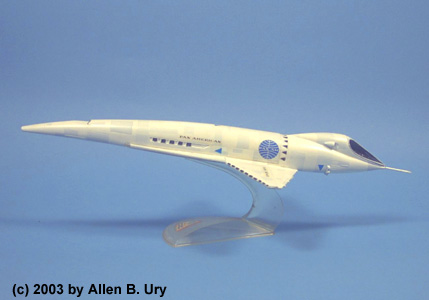
I haven't read Arthur C. Clarke since I was a teen, but I reveled in "2001" and its three sequels back then. It's astonishing to think that he wrote the first in that series in 1956, a time when travel to the moon was merely the stuff of "Amazing Stories" comics. In fact, the movie version of "2001" -- which Clarke co-scripted -- arrived a year before the first moon landing. It was so ahead of its time that it depicted space shuttles (unfortunately, with Pan Am logos. Hey, not even a visionary such as Clarke could have foreseen the rise of a Renaissance-Man entrepreneur Richard Branson and Virgin's "first airline in space" claim.)

Science-fiction books have never been welcomed by the literati -- despite the genre's mainstreaming in popular culture -- but Clarke was as close as a sci-fi author could get to respectibility in non-geek circles. We'll likely not see the likes of him again.

-------

Anthony Minghella's passing was a shocker. I can't claim to have loved his work, though I have a soft spot for "Truly, Madly, Deeply," a British riposte to Demi Moore's "Ghost." Minghella's pictures always looked great even though I often felt distanced from the characters in films such as "The English Patient," "The Talented Mr. Ripley," and "Cold Mountain." But I value Minghella's willingness to take on challenging literary adaptations and hope that his last completed work, an HBO adaptation of the "The No. 1 Ladies' Detective Agency" is a fitting swan song to the director's talents.

Sunday, December 09, 2007

Atonement vs. Atonement

Ladies and gentlemen, welcome to the heavyweight championship of two worlds. In the left corner we have "Atonement," a literary classic that climaxes with a clobbering left-of-field hook. In the right corner, we have the top-ranked fighter in the Oscar division thanks to its upper-class cut. If these two contenders were equally matched, it would end in a clinch. But as the ref, I'm calling this bout a knockout for Ian McEwan's book in the second round.

Director Joe Wright's film is the work of an assured filmmaker, but this adaptation falls short of its source material in its second half. Without giving away the plot, the book hinges on the naive assertion made by a 13-year-old girl, Briony Thallis, that leads to the imprisonement of a young man named Robbie Turner in 1936. The film's account of these events is stellar. But once it time shifts to the second World War, when Robbie has been freed to fight for England, and Briony takes up work in a military hospital ward, the script scissors its way through McEwan's text, cutting to the quick -- and, in so doing, cutting out the heart of the novel.

The book chronicles the long, desperate slog across the north of France during the British retreat of 1940, each stage of the journey plunging into concentric circles of Miltonesque hell as Robbie and his two fellow soldiers encounter horrific scenes of war. McEwan had done meticulous homework to chronicle what happened prior to the evacuation of Dunkirk and it leaves a searing impression on the reader. That section of the novel also tells us more about Robbie's mental anguish and it brings home the full magnitude of what he encounters as a soldier. The reader can almost hear the sobbing cries of blistered heels as they tear up at each footfall. By contrast, the film pretty much cuts out the journey and quickly brings Robbie to the beach where thousands of soldiers await evacuation.

Similarly, the author details the boot camp-like rigor and hardship that Briony endures as a nurse -- her self-conscious act of atonement for her sin at age 13. And so, by failing to capture the full measure and impact of both characters' respective experiences, the film inadequately prepares the viewer for the final rug-pull in the Third Act, set in 1999. There's an act of contrition, but it doesn't feel fully earned by the 123 minute mark. Indeed, there's far too little of Briony in the movie because of the inordinate focus on Briony's sister, Cecilia (perhaps because the role is played by Keira Knightley, the film's sole marquee name, who gets to wear exquisite, waifer-thin costumes.)

Much has been made of the movie's four-minute tracking shot across Dunkirk -- one reliant on the precise choreography of a cast of thousands. Contrast this scene with the uninterrupted camera shot in a battle zone in last year's magnificent "Children of Men." There, the shot pulls the viewer deeper into the moment and quickens the pulse. It's entirely organic to the scene and it's only after the film that one even registers that director Alfonso Cuarón and cinematographer Emmanuel Lubezki pulled off a continuous shot that outshines even the camera flourish at the beginning of Orson Welles's "Touch of Evil." But in "Atonement," the shot feels so self-conscious that it pulls one out of the movie.

Finally, when Brenda Blethyn started attacking a car with an umbrella during a scene in "Atonement," I couldn't help but think of this infamous moment in 2007 taloid news...